When should you cut shooting lanes in Illinois?
Cut your shooting lanes weeks ahead of the hunt, not days ahead. The National Deer Association has a plain rule of thumb for the thick cover you want deer to bed in. Stay out of it from a month before the season opener until the season closes. That gap gives deer time to work out that the spot is safe again. Late winter through summer is the easiest window of all. A cut made then has months to green up before you hunt it.
Blackburn Land Service is based in Cobden. We cut lanes and trails across Jackson, Union and Williamson counties, plus nearby parts of Johnson and Saline counties.
When is the best time to cut shooting lanes?
Late winter, right after the deer seasons close, is the strongest window. Leaves are down, so you can see what blocked your sight lines last fall. The National Deer Association points at that same window. There is no better time to clear some shooting lanes.
The same guidance warns against clearing so much that your lanes look obvious. Cut a little wide and much of it fills back in as vegetation grows through the next spring and summer. That regrowth is working for you.
Spring and early summer work nearly as well. The ground firms up, the machine moves easier, and every cut has a full season to soften. This is also when our hunting property work fits best. A stand, a trail and a spot cleared for a future food plot can all get handled on one trip.
How far ahead of the archery opener should lanes be finished?
Give yourself a month. The National Deer Association recommends being out of your bedding cover a month before the opener. The reason is simple. Deer need quiet time to decide a place is safe.
Illinois archery deer season opens October 1, 2026, according to the Illinois Department of Natural Resources. Count back a month and a lane finished by late August sits inside that rule. Early September is the outside edge, not the target.
Cutting in the last days before you hunt is the worst timing there is. Deer differ in what they will put up with. The National Deer Association notes that some bucks catch one whiff of ground scent. Those deer move to the next property. Machine noise and fresh cut brush land in one place at once. If your calendar is tight, book shooting lanes and access trails early and hunt a different stand first.
Which cutting window fits your hunt?
| Window | Good for | What to watch |
|---|---|---|
| Late winter, after the seasons close | New lanes and cleanup while last season is fresh in your head | Wet ground slows a machine. Expect some fill in by fall, which is what you want |
| Spring and early summer | Bigger projects: several stands, a trail system, ground cleared for a food plot | Leaves hide what the lane will look like in October, so flag your sight lines first |
| Late summer, done by late August | Final trimming before the archery opener | The last roomy window under the one month rule |
| Early September | Touch up on stands you plan to hunt later in the fall | You are close to the opener. Keep the trip short and the cut small |
| After leaf drop, between the season blocks | Opening lanes for firearm and late season stands | You are cutting in season, so deer will shift. Honeysuckle is still green and still blocks the view |
What are the Illinois deer season dates for 2026 and 2027?
The Illinois Department of Natural Resources lists archery deer season in three blocks for counties with a firearm season. The first block runs October 1 to November 19, 2026. The second runs November 23 to December 2, 2026. The third runs December 7, 2026 to January 17, 2027.
The gaps line up with the firearm seasons. First firearm deer season is November 20, 21 and 22, 2026. Second firearm deer season is December 3, 4, 5 and 6, 2026. The muzzleloader only season follows on December 11, 12 and 13, 2026.
Late winter deer season runs December 31, 2026 to January 3, 2027, and January 15 to 17, 2027. Those closing dates are why late winter is such a clean time to work. The hunting is done and the leaves are still down. Check current dates with IDNR before you plan around them.
How wide and how long should a shooting lane be?
Size the lane to the weapon, not to the machine. Bow shots are short. The National Deer Association reported a long running bowhunting study. Compound bow hunters averaged a shot distance of 17.6 yards. Crossbow hunters averaged 19.7 yards. A bow lane does not need to reach far to do its job.
Keep the cut tight. The Missouri Department of Conservation puts it plainly. Cut branches out of your shooting lanes, but leave enough cover around the stand to keep your movement hidden. A lane you can shoot through cleanly, with brush still standing on both sides, beats a wide opening.
Layout matters more than width. The National Deer Association favors long, thin lanes, and says good cover around the lanes is what makes them work. Two lanes set in a V, with the stand where they meet, cover more ground than a single wide lane. Set the stand so your scent blows away from where deer come and go. That is the Missouri Department of Conservation’s first rule for stand sites.
Gun stands change the math. A rifle or slug gun reaches well past bow range. Those lanes get cut longer and follow the lay of the ground. The cover rule at the stand does not change.
What does a forestry mulcher do to a shooting lane?
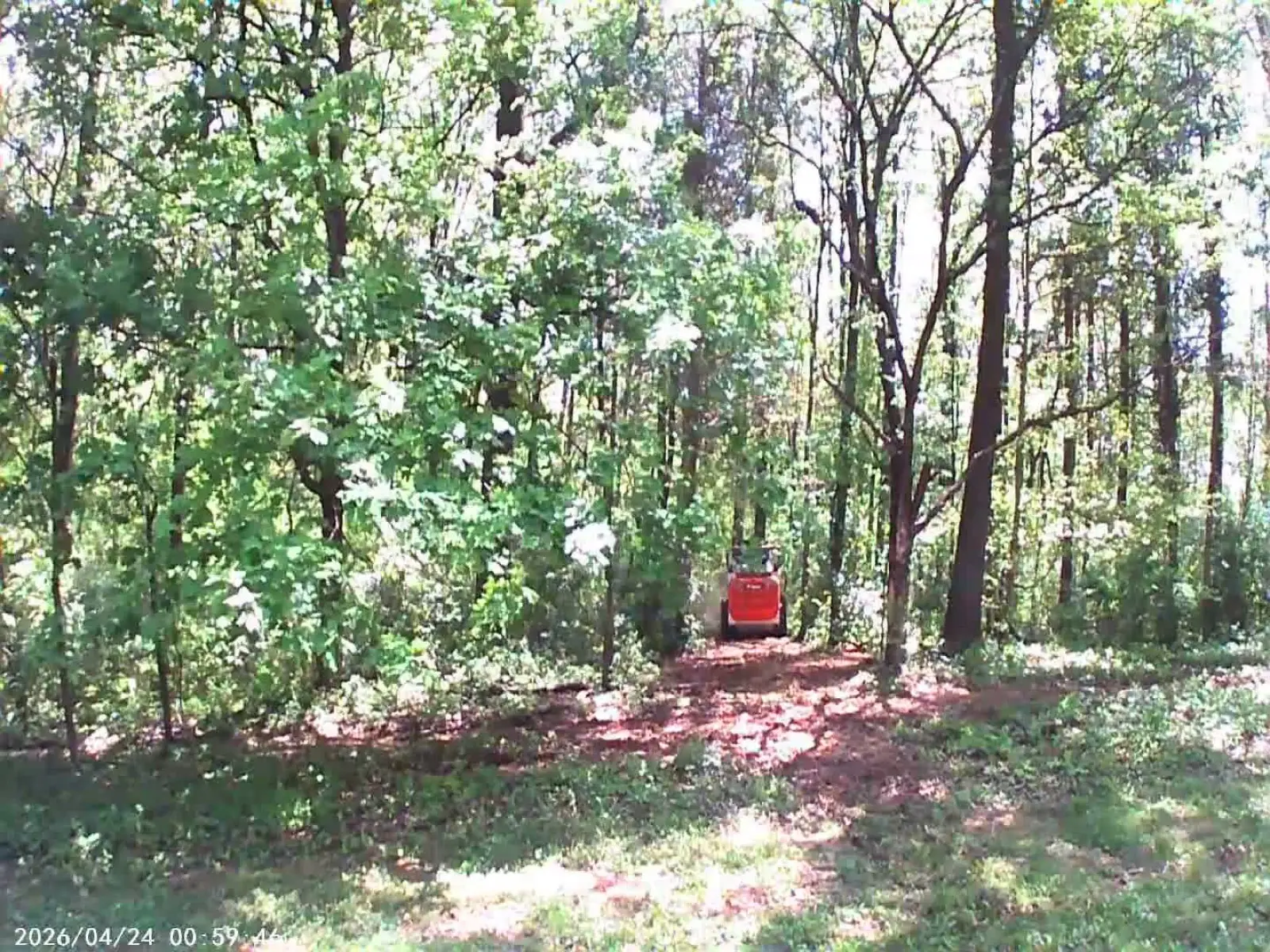
Our machine is a tracked skid steer with a forestry mulching head. It grinds standing brush, vines, saplings and small trees into chips where they stand. Stems come down to grade level. The chips stay on the ground as mulch, so there is nothing to pile up or burn. The ground is usually usable the same day. A tree shear handles a single sapling standing between two trees you want to keep.
Hand tools take a lane apart one stem at a time. That leaves brush piles at the edge of the lane and stumps at knee height. If you do plan to burn material on your property, read up on Illinois burn rules first.
Plan on regrowth. Illinois Extension says removing stems with a saw or loppers triggers vigorous growth. The same guidance says grinding or chipping prepares stumps and later new growth for herbicide. Bush honeysuckle and multiflora rose along a lane come back from the root system. We do not spray. Treating stumps or the flush of new growth is a step you handle or hire a licensed applicator for. Wider brush clearing across an overgrown field follows the same rule.
Access trails get cut with the same machine on the same trip. A trail wide enough to walk or run a side by side keeps entry simple. You get in without pushing through brush. Our trail cutting work ties stands, gates and parking spots together so your entry stays quiet.
Want lanes cut before your next season?
Call or text (618) 697-5190 for a free estimate. Small jobs are welcome, and a single lane is a real job to us. Tell us where the stand sits and how far you want to see. Tell us when you plan to hunt it. We work back from that date.