
Is baiting deer legal in Illinois?
No. Illinois law makes it unlawful to take deer “by the use or aid of bait or baiting of any kind.” That rule is in Section 2.26 of the Wildlife Code, 520 ILCS 5/2.26. Bait includes “food, salt, minerals, and other products,” and only pure water is left out.
An area stays baited for 10 consecutive days after the bait is removed. The same section carves out food plots and normal agricultural practices. That includes mowing or cutting standing crops as a normal farm practice. So a food plot is the legal way to hold deer on your ground.
This guide is general information, not legal advice. Questions about your own ground go to the Illinois Department of Natural Resources (IDNR). Blackburn Land Service is based in Cobden. We clear ground for food plots across Jackson, Union and Williamson counties, plus nearby parts of Johnson and Saline counties.
What counts as bait under Illinois deer baiting laws?
The statute defines bait broadly. It is any material, liquid or solid, including “food, salt, minerals, and other products.” The only exception is pure water. To count, it must be something “that can be ingested, placed, or scattered” to attract or lure white-tailed deer.
Baiting is “the placement or scattering of bait to attract deer.” Hunting deer over any of these counts as hunting with the aid of bait:
- A pile of shelled corn, or corn scattered on the ground
- A feeder that drops corn or pellets
- A salt block or a mineral lick
- Apples and other edible deer attractants
Scent products are where hunters get tripped up. The section carves out “products designed for scent only and not capable of ingestion.” If a deer can eat it, that carve-out does not cover it. Check whether a product is made to be eaten before you use it near a stand.
How long does a spot stay baited after the bait is gone?
The statute treats an area as baited while bait is present. It stays baited “for 10 consecutive days following the removal of bait.” Corn still lying in the dirt is bait that is present. The 10 days start once it is removed.
IDNR lists October 1, 2026 as the opening day of Illinois archery deer season. Bait pulled during the week before the opener leaves that spot baited on opening day. Leave yourself more room than the bare 10 days.
The simpler plan is to give deer a reason to be there that the law allows. Our hunting property improvement work clears ground for a food plot and a quiet way to your stand.
Food plot vs bait: what is the difference?
Both put food in front of deer. Section 2.26 treats them in opposite ways.
| Question | Bait | Food plot |
|---|---|---|
| What it is | Corn, salt, minerals or other edible products put out to draw deer | Ground cleared and planted so deer feed on what grows there |
| Legal to hunt over in Illinois? | No | Yes, under the food plot carve-out in Section 2.26 |
| The statute’s words | ”by the use or aid of bait or baiting of any kind" | "food plots, or normal agricultural practices” |
| The 10-day rule | The area stays baited “for 10 consecutive days following the removal of bait” | Does not apply to the plot. The rule counts days after bait is removed |
Bait placed inside a food plot is still bait. A salt block or a corn pile in the plot makes that spot baited. The plot itself is legal, but with a pile on it, that spot counts as baited.
A feeder at the edge of a plot works the same way. Spilled feed under it is bait that is still present. Once all of it is gone, the 10-day count starts.
Why is a food plot the legal way to hold deer?
The same section that bans hunting over bait leaves room for normal land use. For white-tailed deer, nothing in it prevents food plots or normal agricultural practices. That includes planting, harvesting and maintenance such as cultivating.
Standing crops get the same treatment. The section does not prevent mowing or cutting standing crops as a normal agricultural or soil stabilization practice. Baiting means placing or scattering bait. A plot grows its food in the soil instead.
That is the trade. You cannot hunt over corn you put out, but you can hunt over food you grow. A plot takes more work up front, and it keeps you on the right side of Section 2.26.
How does a food plot start on brushy ground?
You want deer on your ground, and the spot you picked for a plot is grown up in brush. A food plot needs open ground and sunlight, so clearing comes first. Around here, the brush we grind most often is bush honeysuckle, autumn olive, multiflora rose and wild vines. Clearing ground for a future food plot is part of our hunting property work.
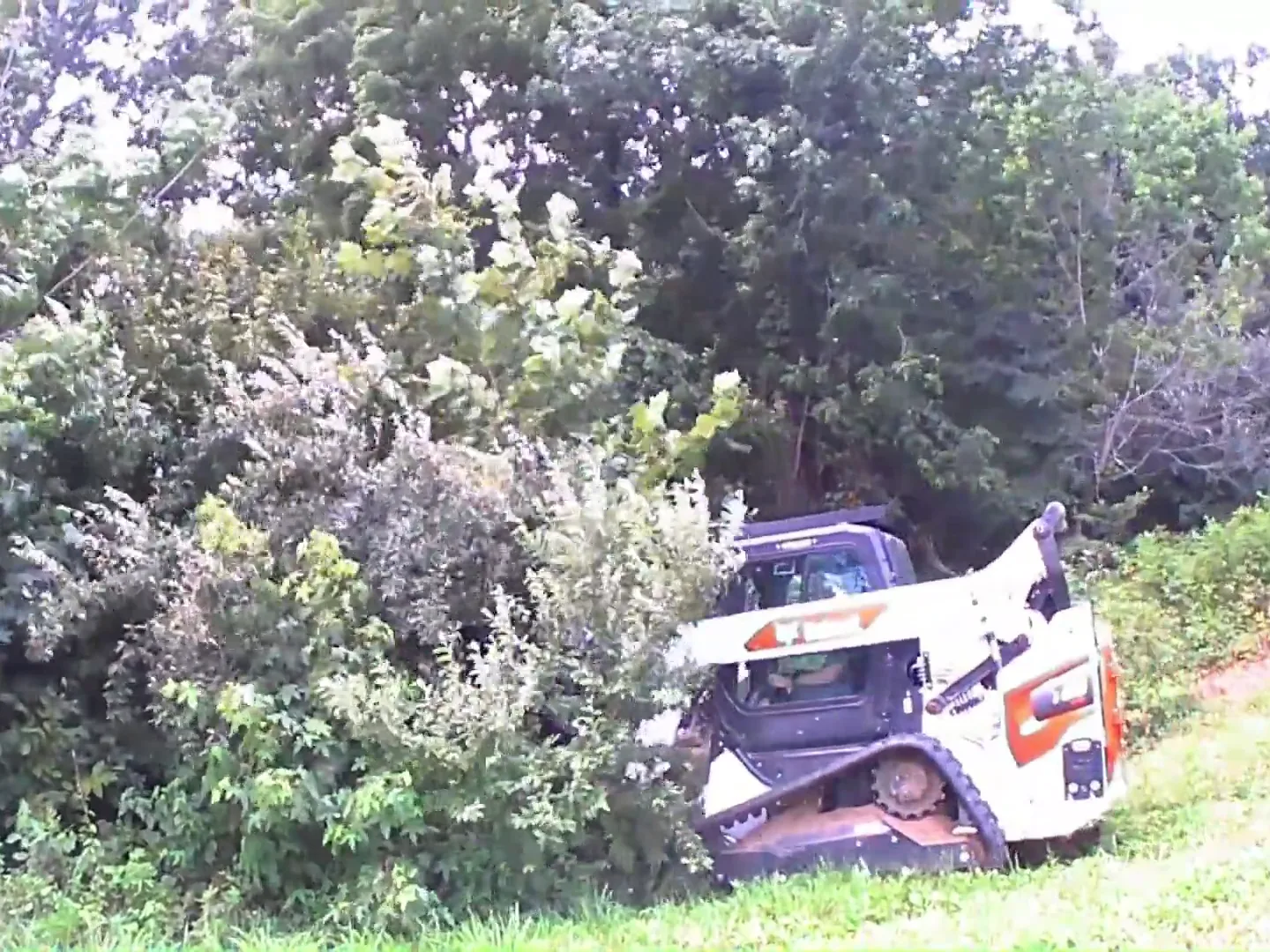
Our forestry mulching machine is a tracked skid steer with a mulching head. It grinds brush, vines, saplings and small trees into chips where they stand. Stumps get cut down to grade level. Larger trees along the edge stay where they are.
The chips stay on the ground as mulch, so there is nothing to pile up or burn. With the cover gone, sunlight reaches the soil. The ground is usually usable the same day.
The planting, lime, seed and fertilizer are your step or your farmer’s. The roots stay in the ground, and some brush will sprout back. Treating stumps or regrowth is a separate step you handle or hire a licensed applicator for.
Flag the corners of the plot before the work starts, and mark any trees you want to keep. That way the cleared spot matches the plot you have in mind.
Where do shooting lanes and access trails fit?
A food plot is half of the setup. You also need a way to reach your stand and a clear shot from it.
Look at the ground between the thick cover where deer bed and the plot where they feed. A stand along that path, with a lane or two cut toward it, gives you clear shots. An access trail lets you reach the stand without pushing through brush. It also gives you a way to bring seed and gear to the plot at planting time.
Our trail cutting uses the same machine, so lanes and trails can get cut on one trip. Cut them well ahead of the season. Our guide on when to cut shooting lanes in Illinois lays out the timing around the IDNR season dates.
Ready to clear ground for a food plot?
Call or text (618) 697-5190 for a free estimate. Small jobs are welcome, and a single plot is a real job to us. Tell us where the plot will go and where your stand sits. We will look at the ground and price the clearing.